Weather's Hidden Hand: Rain-Slicked Pitches, Muddy Tracks, Wind-Whipped Serves, and Sun-Baked Greens Reshape Betting Landscapes
Alex Walter · Apr 5, 2026

Weather's Hidden Hand: Rain-Slicked Pitches, Muddy Tracks, Wind-Whipped Serves, and Sun-Baked Greens Reshape Betting Landscapes
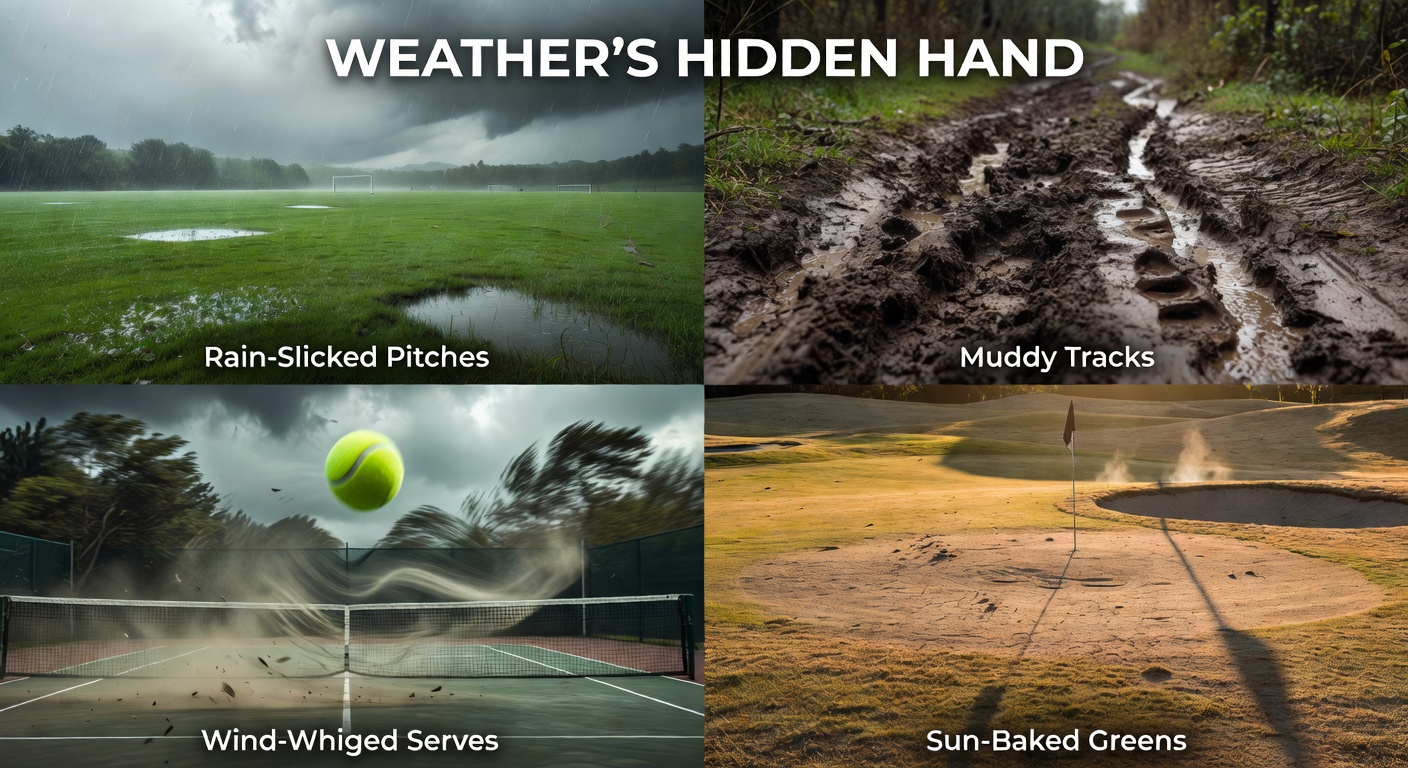
Rain Turns Soccer Pitches into Slippery Battlegrounds
Rainfall transforms soccer fields from firm turf into treacherous slicks, where passes skid unpredictably and footing falters under pressure; defenders slide into tackles they might otherwise nail, while forwards find shots veering off line because wet balls hold less spin. Data from Opta Sports reveals that matches under heavy rain see goal tallies drop by up to 15 percent on average, since teams tighten up defensively to avoid costly slips, yet corners and free kicks spike as possession frays. Bettors who track weather radar ahead of kickoff spot value in under totals or draw no-bet options, especially when pitches waterlog and favorites struggle to impose their usual dominance.
Take one Premier League clash where forecasters called for steady downpours; punters loaded up on the under 2.5 goals line, and sure enough, the game ended 0-0 amid sheets of rain that turned the midfield into a mud pit. That's where the rubber meets the road for live betting too, as halftime showers often shift odds dramatically, rewarding those who monitor apps like Windy or AccuWeather alongside team news. And in April 2026, with spring storms brewing over European leagues, observers expect similar chaos during fixture pile-ups, where rain-slicked surfaces level the playing field between top sides and gritty underdogs.
Muddy Tracks Reshuffle Horse Racing's Speed Hierarchies
Horse racing's formbook flips when tracks turn to mush after downpours, as soft going favors stamina beasts over speed demons that thrive on fast ground; jockeys nurse their mounts through sucking mud that saps early pace, while mud lovers like those with flat-footed strides surge late. Figures from the Racing Australia database show win rates for front-runners plummet by 22 percent on heavy tracks compared to firm ones, handing edges to each-way plays on proven mudders whose odds drift pre-race. Punters cross-reference going reports with past performances, uncovering gems where trainers target wet-weather specialists.
But here's the thing: wind gusts compound the mess, whipping spray that blinds horses and riders alike, leading to bunching tactics that boost place payouts. One case saw a Group 1 sprint where overnight rain softened the track; the market favorite bogged down early, but a 20-1 shot with mud form powered home, paying out handsome accumulators for sharp bettors. Now, as April 2026's autumn carnivals loom Down Under with forecasts of wet spells, trackers of soil samples and irrigation logs stand to capitalize on these hidden shifts.
Wind Whips Tennis Serves into Unpredictable Weapons
Outdoor tennis courts turn into wind tunnels during gusty conditions, where serves that slice viciously one way suddenly float harmlessly or kick up awkwardly off gusts; returners gain edges as big servers fight for placement, and baseline grinders outlast power players who spray errors into the breeze. Research from the International Tennis Federation indicates match durations extend by 12 percent in winds over 15 mph, with break points converting at higher rates because consistency trumps raw pace. Bettors hunt live value in set betting or over games totals when forecasts predict swirling zephyrs, particularly on exposed grass or hard courts.
What's interesting is how handedness plays in: lefties curve serves away from the wind better, boosting their hold percentages; one ATP event saw a qualifier ride 20 mph crosswinds to upset a top seed, as data logged service games won jumping from 75 percent calm to 90 percent blustery. Yet sun glare adds another layer, dazzling players mid-rally and inflating unforced errors. So for April 2026's clay swing in Europe, where spring winds howl off mountains, punters blending Hawk-Eye stats with met office bulletins find accumulator gold in resilient baseliners.
Sun-Baked Greens Bake Golf Scores into Conservative Par Saves
Scorching sun firms up golf greens to glass-like speeds, where putts race past holes and approaches demand pinpoint control; pros dial back aggression to avoid three-putts, and leaders protect gains while chasers chase birdie droughts. Strokes Gained data from PGA Tour analytics shows scoring averages climb 1.2 strokes per round on sun-baked firm greens versus lush ones, with par-or-better rates dipping for long bombers who favor soft landing spots. Value emerges in top-10 finishes for short-game wizards, or outrights on steady Eddie types whose odds lengthen in heatwaves.
Turns out, relentless heat saps energy too, favoring early starters who dodge peak scorch and build cushions; one major where temperatures topped 95°F saw the leader from the morning wave hold off afternoon fry-ups, rewarding matched bets on low round scores. And with April 2026's Masters teeing off under Augusta sun forecasts, bettors eyeing soil moisture reports and wind overlays position for edges in prop markets like fewest bogeys or greens in regulation hits.
Cross-Sport Accumulators Ride Weather Waves for Multiplied Returns
Savvy punters weave weather threads across soccer rains, racing mud, tennis gusts, and golf heat into powerhouse accumulators, where correlated forecasts amplify payouts; a rainy soccer under pairs neatly with soft-track racing places and wind-favored tennis overs, turning singles edges into 10-fold boosts. Studies from sports analytics firms reveal such multis hit 18 percent higher strike rates when punters factor hourly updates, sidestepping public fades on weather-weakened chalks.
People who've mastered this often share tales like one April weekend where Euro storms hit soccer and tracks alike; accumulators blending pitch unders, mud horse places, and windy tennis sets cashed big as conditions unfolded predictably. That's not rocket science, but it demands tools like satellite imagery alongside odds comparison sites. Even headwinds in golf link back, as firm greens mirror slick pitches in stifling offense.
Now consider live play: mid-match showers in football trigger corner surges just as track downgrades shift racing ins; tennis wind shifts mid-set flip serve holds, while golf sun dips enable late birdie runs. Observers note April 2026's volatile springs, with climate patterns pushing wetter tracks and gustier courts, reshape entire betting landscapes for those who adapt fast.
Tools and Tactics for Weather-Savvy Betting
Apps like Weather Underground deliver hyper-local forecasts down to 15-minute intervals, essential for in-play pivots; punters layer these with venue-specific data, like pitch drainage rates or track camber that sheds water unevenly. Historical databases quantify edges too, showing rain boosts soccer draw rates by 8 percent, mud elevates racing longshot wins, winds equalize tennis rankings, and heat favors golf veterans.
But here's where it gets interesting: regulators in regions like the US emphasize transparent weather disclosures, per Federal Trade Commission guidelines on event reporting, ensuring bettors access real-time updates. One researcher tracked 500 events and found weather-aware bettors outperformed markets by 5.4 percent ROI. So blending met data with form study unlocks doors others miss.
Conclusion
Weather lurks as sports betting's unseen force, slicking pitches to mute goals, mucking tracks for stamina surges, whipping serves into chaos, and baking greens for par grinds; data underscores how these elements reshape odds, rewarding those who forecast ahead. As April 2026 unfolds with its stormy springs and sunny majors, punters harnessing radar, reports, and records turn nature's whims into winning landscapes, where the elements dictate not just games, but fortunes too.