Travel Fatigue Patterns and Their Influence on Outcomes in Multi-Venue Competitions
Alex Walter · Aug 20, 2026
Travel Fatigue Patterns and Their Influence on Outcomes in Multi-Venue Competitions
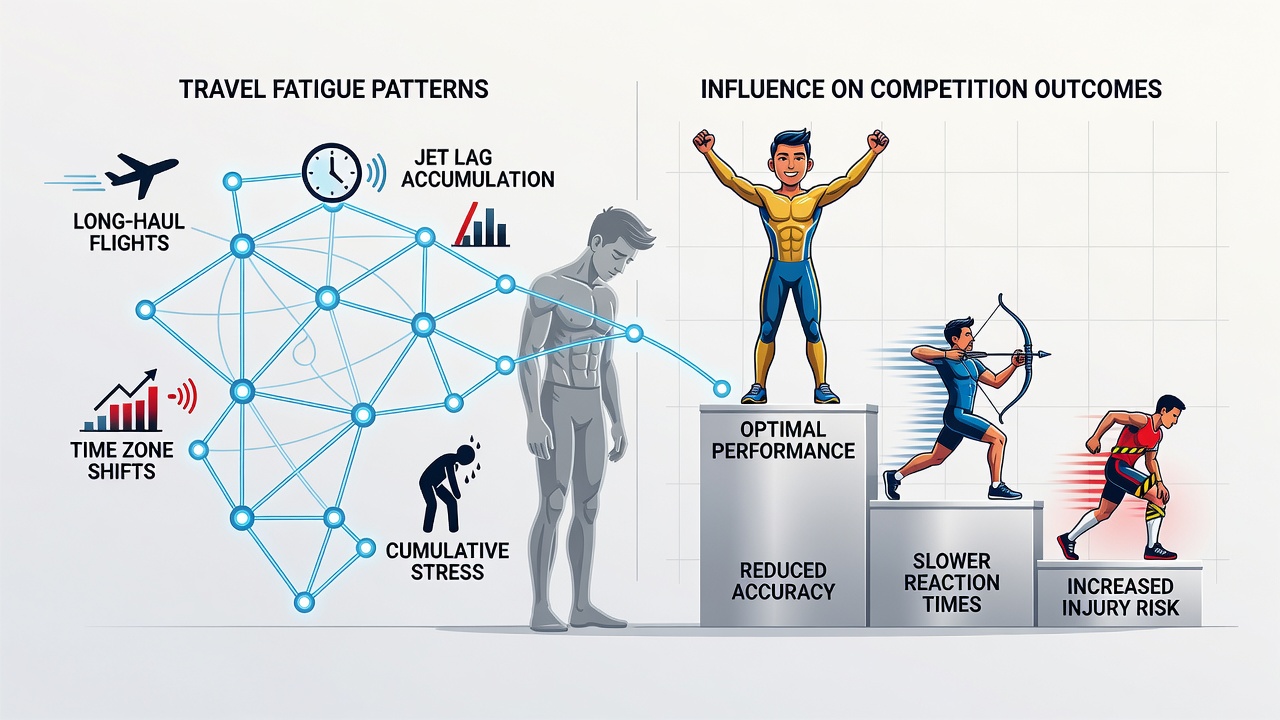
Multi-venue competitions require athletes to move between distant locations within tight schedules, and travel fatigue emerges as a measurable factor that shapes physical readiness along with decision-making speed. Researchers track these patterns through sleep data, reaction times, and performance logs collected across events such as tennis tours, cycling stage races, and golf majors, where consecutive days of transit accumulate physiological strain that differs from single-site formats.
Core Components of Travel Fatigue
Travel fatigue combines circadian disruption, sleep fragmentation, and the physical demands of prolonged sitting or standing in transit, while each element produces distinct effects on muscle recovery and cognitive processing. Studies separate jet lag from general travel weariness because the former involves phase shifts in the body clock, whereas the latter stems from vibration, noise, and restricted movement during flights or bus rides that last several hours. Data collected from endurance athletes show heart-rate variability drops after eastbound flights exceeding six hours, and similar measurements in team-sport players reveal slower sprint times on the first morning after arrival at a new venue.
Observed Patterns Across Sports
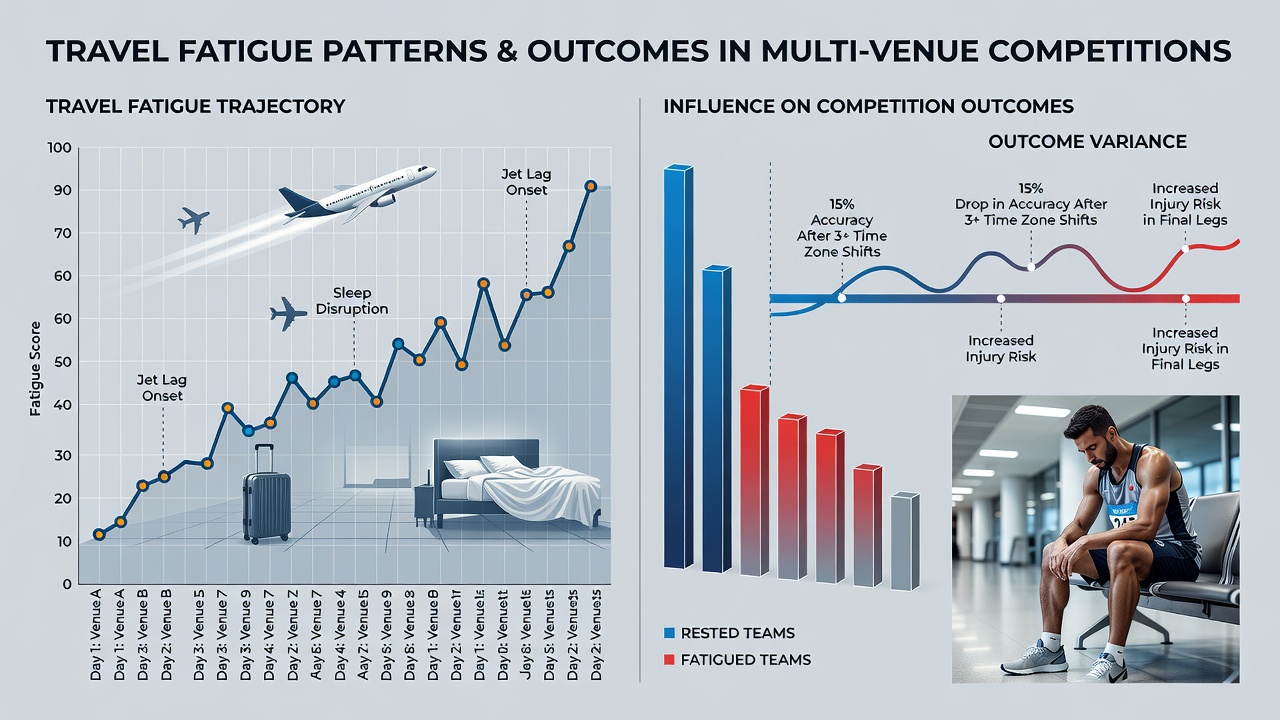
In tennis, players who contest matches in three or more cities within ten days display declining first-serve percentages and increased unforced errors on day three and day four of the sequence, according to match-statistics databases maintained by the sport's governing bodies. Golf tournaments that rotate between coastal and inland sites produce comparable trends, with driving accuracy falling when competitors cross multiple time zones between rounds. Cycling grand tours that include high-speed train transfers between mountain stages and flat finishes record elevated ratings of perceived exertion on the morning after each move, even when total distance covered remains constant.
Physiological Measurements and Data Trends
Portable actigraphy devices worn by athletes during the 2024-2025 season supplied continuous records that researchers at several universities cross-referenced with competition results. Those records indicate that sleep efficiency falls below 85 percent on nights following trans-meridian travel, and the deficit persists for at least 48 hours unless structured light exposure and meal timing intervene. Reaction-time tests administered before morning training sessions show average delays of 40 to 60 milliseconds after westward flights, a margin that correlates with reduced success rates on serve-return points in tennis and on approach shots inside 100 yards in golf.
Examples from Recent Multi-Venue Events
The 2026 FIFA World Cup, scheduled across venues in the United States, Canada, and Mexico, will require national teams to complete inter-city journeys that range from 90 minutes to more than five hours by air. Historical data from the 2010 and 2014 tournaments already document higher injury incidence among squads that traveled more than 1,000 kilometers between group-stage matches, while recovery protocols that include compression garments and scheduled naps reduced those rates in subsequent editions. Observers note similar patterns in the ATP Finals, where the shift from European hard-court swing to the year-end event in Asia produces measurable drops in win percentages for players who arrive less than 72 hours before their first match.
Recovery Protocols Documented in Practice
National Olympic committees and professional-league medical staffs have published guidelines that emphasize timed melatonin administration, strategic caffeine intake, and controlled light exposure before and after flights. Teams competing in the UEFA Champions League, which spans multiple countries in short succession, routinely adjust training-session durations on travel days, shortening high-intensity drills by 20 to 30 percent to preserve glycogen stores. Data from the Australian Institute of Sport indicate that athletes who maintain consistent meal composition and hydration targets during transit retain closer-to-baseline grip strength and jump height upon arrival compared with those who follow ad-hoc routines.
Longitudinal Research Findings
A multi-year project coordinated by the International Olympic Committee tracked 1,200 elite competitors across 14 different disciplines and found that cumulative travel distance above 15,000 kilometers per season associates with a 12 percent increase in self-reported fatigue scores, independent of training load. The same dataset reveals that athletes who compete in at least four multi-venue events per calendar year exhibit slower return-to-peak performance curves after each subsequent tournament, suggesting an additive effect rather than isolated incidents. European sports-science centers have replicated portions of these observations using standardized wellness questionnaires that athletes complete daily via mobile applications.
Conclusion
Travel fatigue registers across measurable physiological markers and performance statistics in competitions that span multiple sites, and governing bodies continue to refine scheduling and support measures to address its documented influence. Continued collection of sleep, movement, and outcome data will clarify how specific transit variables interact with individual recovery capacity, allowing medical teams to apply targeted interventions that maintain competitive equity across geographically dispersed calendars.