Seasonal Travel Demands Reshape Outcomes Across Premier League Fixtures, Grand Slam Schedules, and Thoroughbred Circuits
Elena Hoffmann · Aug 20, 2026
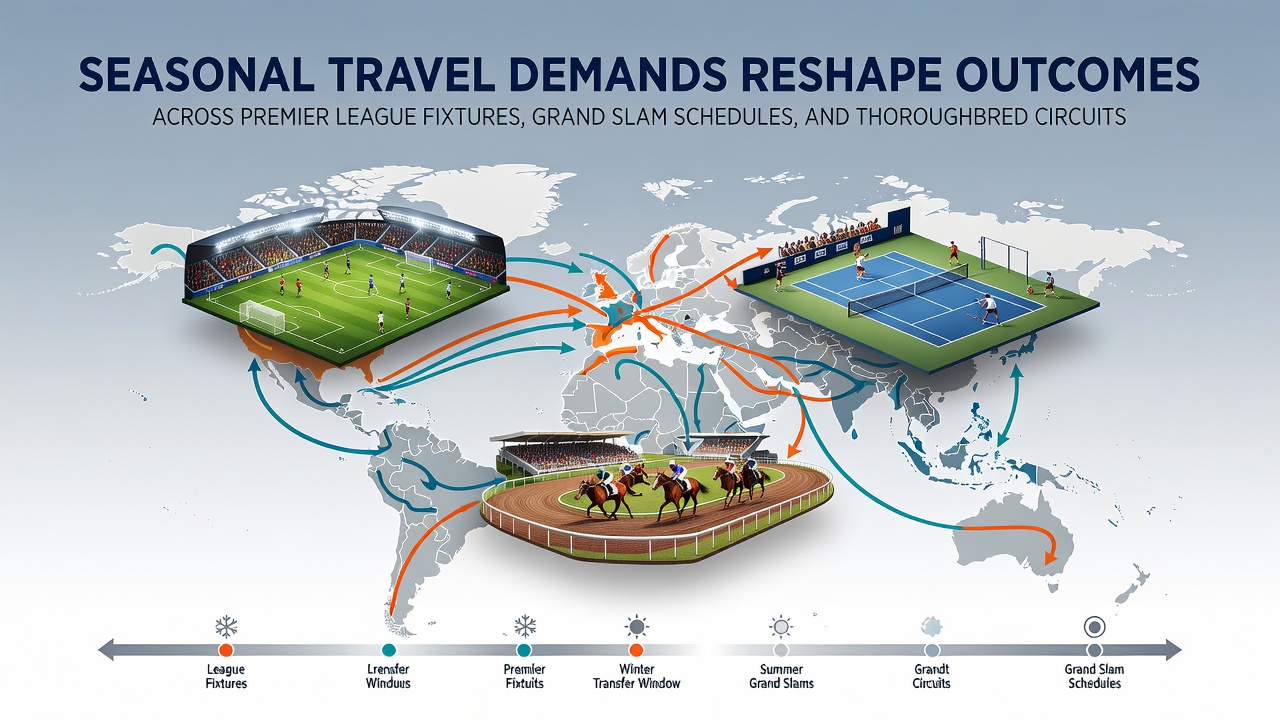
Seasonal Travel Demands Reshape Outcomes Across Premier League Fixtures, Grand Slam Schedules, and Thoroughbred Circuits
Seasonal travel patterns create measurable shifts in performance across football, tennis, and horse racing calendars each year, with data from multiple sports organizations showing consistent correlations between long-distance journeys and altered results. Premier League clubs face repeated domestic and occasional European commitments that compound fatigue, while Grand Slam participants navigate transcontinental flights between major events, and thoroughbred connections transport horses between regional and international meetings. These movements intensify during summer and early autumn windows when fixtures overlap with major tournaments and festival racing dates.
Premier League Travel Patterns and Fixture Congestion
Premier League schedules place clubs under sustained pressure from August onward, when the new campaign begins alongside European competitions for qualified teams. Data indicates that squads traveling over 300 kilometers for away matches record lower win percentages in the immediate follow-up fixture compared with shorter journeys. August 2026 brings additional complexity because the league calendar opens amid international qualifiers and pre-season tours that leave some players with limited recovery time before domestic rounds resume. Observers note that mid-table sides often absorb the heaviest toll when they combine long-haul European ties with weekend league obligations, since squad depth varies significantly across the division.
Grand Slam Schedules and Player Movement
Grand Slam tennis events cluster in a way that forces extensive travel for top-ranked players, particularly between the European clay and grass seasons and the North American hard-court swing. The US Open in late August places athletes who competed at Wimbledon or smaller European events only weeks earlier into a compressed recovery window. Figures from the Association of Tennis Professionals reveal that players crossing more than five time zones ahead of a major show reduced hold percentages on serve in early rounds. Those who build rest periods into their calendars tend to sustain deeper runs, whereas participants who accept extra exhibition commitments frequently exit earlier than seeding predictions suggest. August 2026 will follow the same pattern, with the tournament falling shortly after several ATP 500 events on the opposite side of the Atlantic.
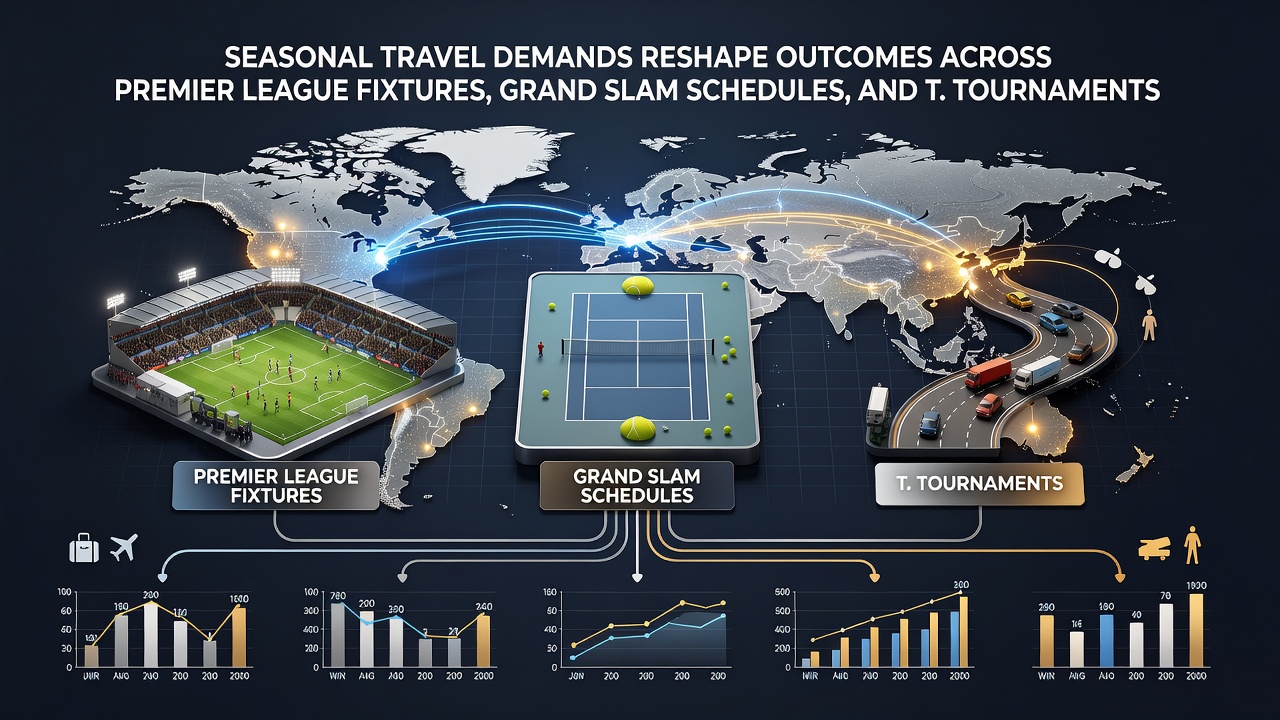
Thoroughbred Circuits and Transport Logistics
Thoroughbred racing circuits operate on tight seasonal windows that require horses to move between training centers and racecourses, sometimes across borders. Research compiled by the International Federation of Horseracing Authorities shows that long-distance road or air travel correlates with temporary drops in performance metrics such as speed figures and finishing positions, especially when animals arrive less than 48 hours before post time. Festival meetings in August place additional strain on connections because multiple high-value races coincide within days of one another at different venues. Trainers who maintain dedicated transport teams and controlled acclimatization protocols report more stable outcomes, while smaller operations that rely on shared logistics encounter greater variability in results.
Cross-Sport Overlaps in August Windows
August creates simultaneous pressure points across all three sports because Premier League fixtures, the US Open, and several major racing festivals occur within the same four-week span. Players, teams, and connections share airports, hotels, and recovery facilities during these periods, which amplifies the cumulative effect of travel. Statistics gathered by regional tourism and event authorities indicate spikes in flight volumes that coincide with measurable dips in expected performance across disciplines. Teams and stables that schedule buffer days between arrivals and competition maintain more consistent outputs, whereas those operating on tighter timelines experience wider result fluctuations.
Recovery Protocols and Scheduling Adjustments
Sports governing bodies have introduced targeted measures to mitigate travel effects, including adjusted rest rules for tennis players after long-haul events and veterinary guidelines for horses crossing climate zones. Premier League clubs increasingly employ chartered flights and on-site medical monitoring to reduce the impact of repeated journeys. Evidence from multiple seasons demonstrates that structured recovery programs narrow the gap between pre-travel expectations and actual outcomes, although implementation costs limit adoption among smaller operations. August 2026 will test these systems again as overlapping calendars repeat the established pattern of elevated movement across continents.
Conclusion
Seasonal travel demands continue to influence competitive outcomes in the Premier League, Grand Slam tennis, and thoroughbred racing through documented effects on recovery, performance consistency, and fixture results. Data collected across organizations shows that longer journeys correlate with shifts in expected performance, while structured scheduling and recovery measures help stabilize outcomes where applied. August periods, including the 2026 window, represent peak overlap and therefore heightened relevance for those tracking these patterns across the three sports.