Leveraging Biomechanical Data From Athlete Monitoring Systems to Spot In-Game Adjustments in Soccer, Equine Competitions, Tennis, and Golf
Alex Walter · May 16, 2026
Leveraging Biomechanical Data From Athlete Monitoring Systems to Spot In-Game Adjustments in Soccer, Equine Competitions, Tennis, and Golf
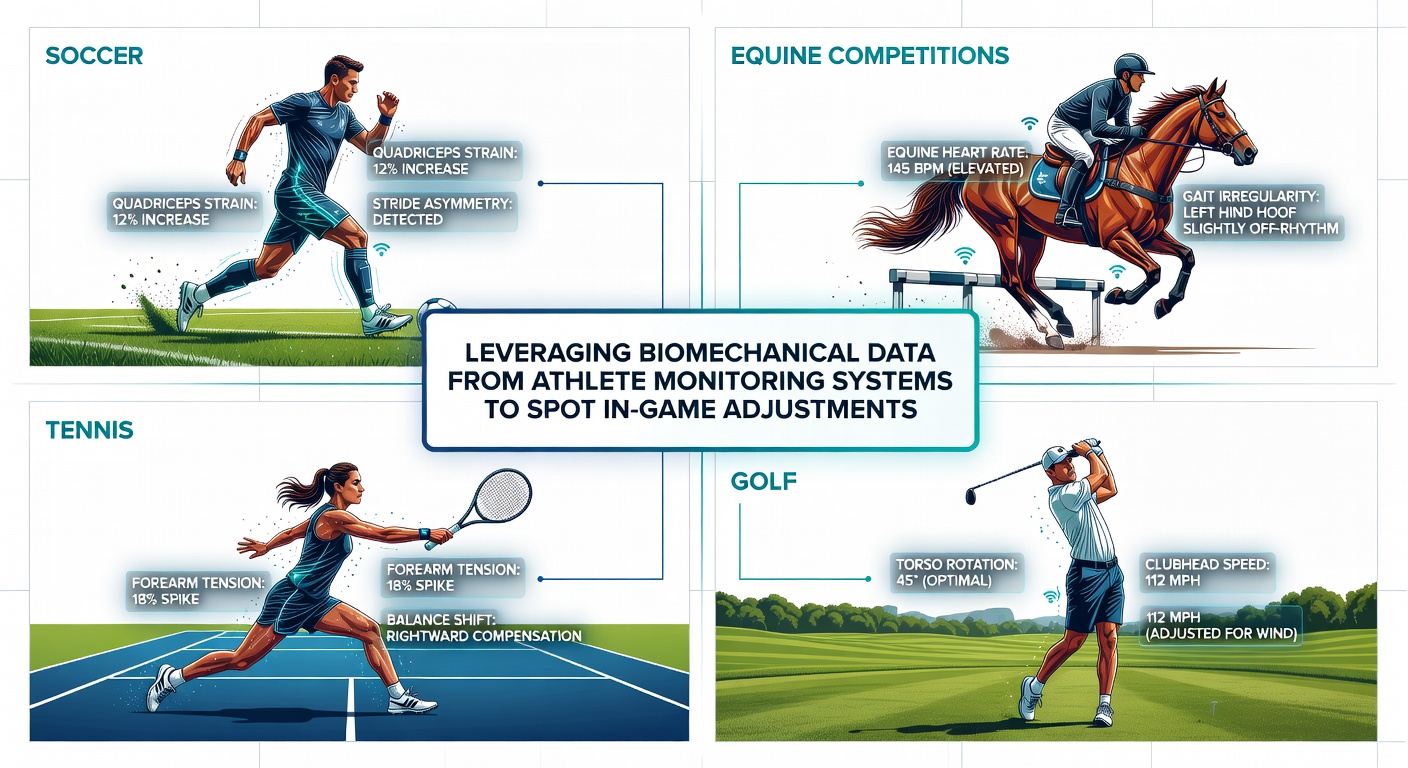
Biomechanical monitoring systems collect detailed measurements of body mechanics, joint angles, force production, and movement efficiency during live competitions, and these tools now allow teams to identify when athletes or horses deviate from optimal patterns mid-event so that coaches and support staff can call for immediate adjustments.
Sports science programs across multiple disciplines integrate wearable sensors, inertial measurement units, and force platforms that transmit real-time data streams, and analysts review this information on tablets or headsets to spot shifts in gait symmetry, stride length, or rotational velocity that signal fatigue or mechanical breakdown before visible performance drops occur.
Soccer Applications in Mid-Match Tactical Shifts
In soccer matches, players wear GPS-enabled vests and additional limb sensors that track acceleration profiles, ground reaction forces, and pelvic rotation throughout each half, and coaching staffs use thresholds set from training baselines to detect when a midfielder's left-right asymmetry exceeds normal ranges during pressing sequences. When data shows reduced knee flexion on the dominant side after sixty minutes, teams often substitute or reposition that player to preserve defensive structure, and studies from European professional leagues confirm such interventions maintain team pressing intensity for longer periods.
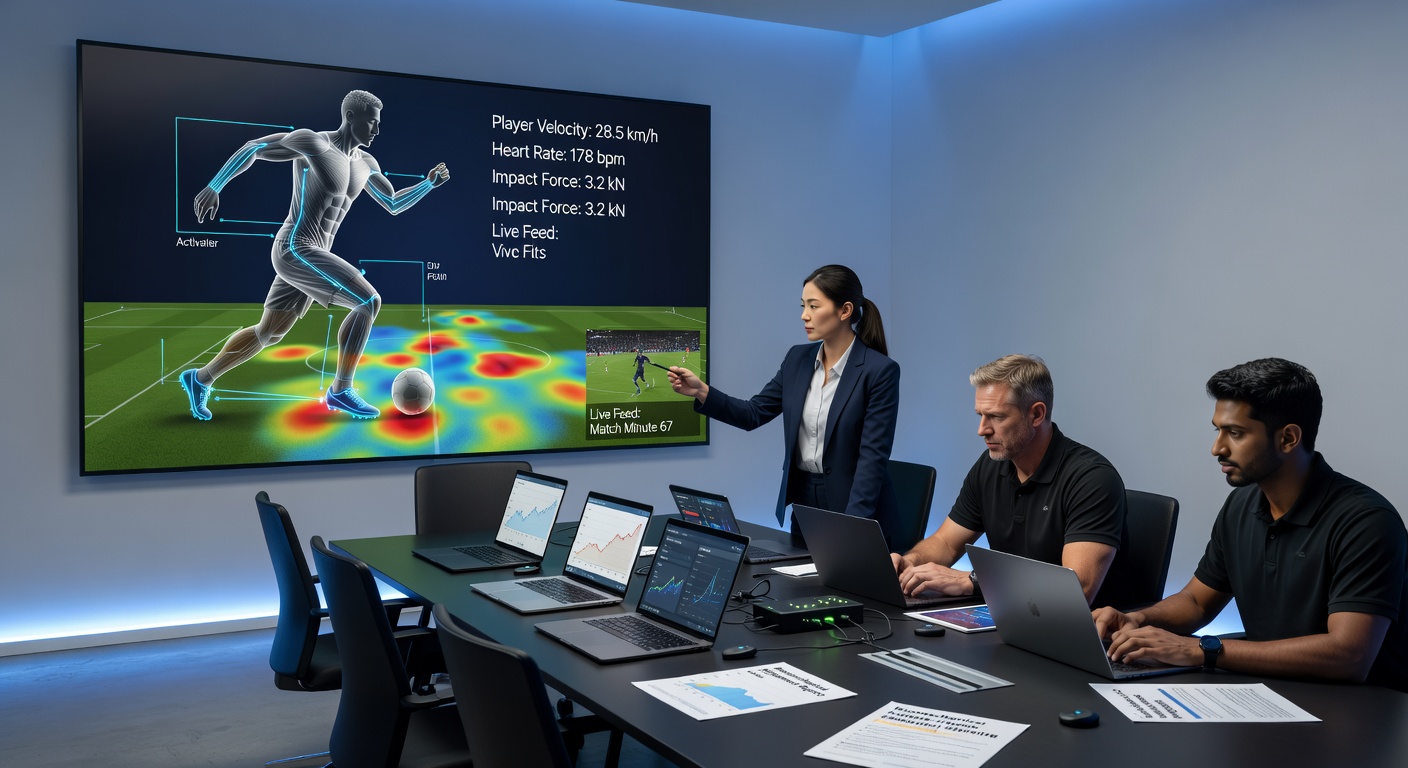
Analysts cross-reference biomechanical flags with positional heat maps, and this combined view reveals when fullbacks begin shortening their recovery runs because hip extension power has dropped, prompting managers to instruct wider defensive lines or switch to a back-three formation. Systems deployed in major European competitions during the 2025-2026 season delivered alerts within thirty seconds of detected changes, allowing sideline staff to communicate adjustments before the next set piece.
Equine Competitions and Gait Analysis on the Track
Horse racing and eventing competitions employ saddle-mounted inertial sensors plus leg wraps that measure stride frequency, fetlock extension angles, and vertical displacement during each furlong, and veterinarians or trainers receive alerts when a horse's lead leg shows increased stance time that often precedes compensatory movements. In May 2026, several Group 1 races incorporated these monitoring arrays as standard equipment, and data logs revealed that horses maintaining consistent fetlock angles through the final bend held their positions more reliably than those exhibiting early asymmetry.
Trainers watching live feeds compare current stride data against each horse's established profile from morning workouts, and when peak vertical force drops below the pre-race threshold they radio jockeys to ease tempo or change lead legs earlier than planned. This approach has reduced overexertion incidents in steeplechase events, where repeated jumping already places high loads on forelimbs, while still allowing horses to finish strongly when mechanical efficiency remains within target ranges.
Tennis and Real-Time Swing Mechanics Corrections
Professional tennis players attach small sensors to rackets and wrists that capture racket head speed, spin axis, and shoulder rotation timing on every stroke, and coaches sitting courtside review these metrics between changeovers to identify when serve toss consistency declines or when elbow extension velocity decreases after prolonged baseline rallies. During the 2026 clay-court swing, several top players adjusted their service motion mid-match after receiving data showing reduced trunk rotation that correlated with second-serve fault increases.
Coaches relay concise instructions such as "wider toss on second serves" or "shorten backswing on returns," and players who incorporated these cues often regained first-serve percentages within two games. The same sensor arrays also track footwork loading patterns, allowing support staff to flag when a player begins favoring one side during lateral movements, which frequently precedes slower recovery to wide balls.
Golf and Swing Path Adjustments on the Course
Golfers use smart grips, shaft strain gauges, and pressure-mapping insoles that record grip pressure distribution, shaft deflection, and weight transfer throughout each swing on the range and during tournament rounds, and caddies receive summarized reports on devices that highlight when a player's downswing plane has flattened or when early extension appears in the lower body. At major events in spring 2026, players who received mid-round alerts about increased grip pressure on the trail hand often made immediate grip-pressure reductions and restored center-face contact rates on approach shots.
Because golf rounds span four to five hours, biomechanical drift accumulates gradually, and systems flag cumulative changes such as reduced hip-shoulder separation that typically develops after the tenth hole. Players who responded by widening stance width or slowing transition tempo maintained ball-striking consistency into the final holes, and tournament data shows those adjustments correlated with fewer three-putts caused by fatigue-induced posture changes.
Integration Challenges and Data Interpretation Standards
Teams must establish individualized baselines during training blocks so that live deviations stand out clearly against normal variation, and governing bodies in several sports have begun publishing guidelines for acceptable sensor accuracy and data privacy. The International Olympic Committee and the Australian Institute of Sport both released updated frameworks in 2025 covering how biomechanical thresholds should be validated before use in competition, and federations in tennis and golf adopted similar protocols to ensure alerts remain reliable under match pressure.
Analysts combine biomechanical streams with heart-rate variability and perceived-exertion scores, yet they still require human judgment to decide whether a detected shift warrants an immediate change or simply continued monitoring. Over-alerting can disrupt athlete focus, so successful programs apply strict confidence intervals before sending messages to coaches or players during active play.
Future Developments Expected by Late 2026
Emerging systems aim to fuse biomechanical data with computer-vision tracking from broadcast cameras, creating a more complete picture of how external factors like wind or court surface interact with an athlete's movement patterns. Research groups at several universities are testing machine-learning models that predict the likelihood of further mechanical breakdown within the next five minutes based on current trends, which could allow even earlier proactive adjustments.
As sensor miniaturization continues and battery life improves, more granular joint-level data will become available without adding noticeable weight or restriction, and sports such as soccer and tennis are already piloting next-generation versions ahead of major summer tournaments. Equine programs continue refining wireless telemetry that survives high-speed gallops and water jumps while maintaining signal integrity.
Conclusion
Biomechanical monitoring has moved from post-event analysis to in-competition decision support across soccer, equine events, tennis, and golf, and the ability to spot mechanical changes quickly now informs substitutions, pace instructions, swing tweaks, and positioning shifts while play continues. Data from standardized systems provides objective markers that complement traditional coaching observation, and continued refinement of thresholds and delivery methods promises further precision in how adjustments are timed and communicated during live competition.