Exploring Interconnected Performance Indicators Across Court, Course, and Track for Strategic Multi-Market Wagers
Wendy Perry · Jun 18, 2026
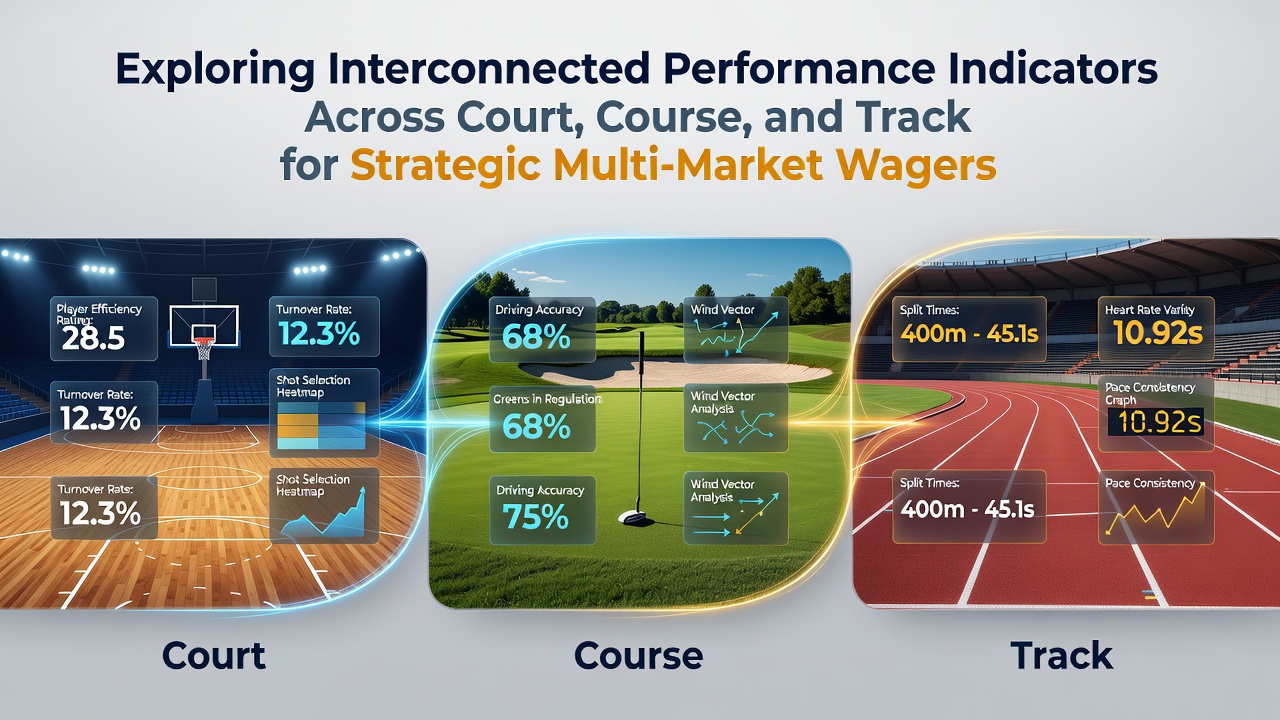
Exploring Interconnected Performance Indicators Across Court, Course, and Track for Strategic Multi-Market Wagers
Performance indicators in tennis, golf, and horse racing often overlap in ways that allow analysts to build layered betting approaches across different markets, and June 2026 brings several overlapping events where these connections become especially visible. Grass court tennis swings into focus with Wimbledon preparations, while golf majors transition into the summer stretch and major racing festivals occupy the calendar in both hemispheres.
Core Indicators on the Court
Tennis metrics such as first-serve percentages, return points won, and tiebreak conversion rates provide measurable patterns that repeat across surfaces, and observers note these numbers shift predictably when players move from clay to grass in the early summer window. Data compiled during the 2025 grass court swing showed that players maintaining above 68 percent first-serve points won carried that edge into the opening rounds of Wimbledon, according to figures released by Tennis Australia. Those same serve-hold statistics translate into accumulator components when paired with other sports because they reflect repeatable dominance rather than isolated results.
Course-Based Metrics in Golf
Golf relies on strokes-gained breakdowns, scrambling percentages, and driving accuracy that respond to course conditions in measurable ways, and these indicators gain relevance during June when players adapt from firm fairways at the U.S. Open to softer layouts later in the month. Research from the PGA Tour’s ShotLink system demonstrates that players who improve their strokes gained around the green by at least 0.8 over a four-week span tend to post stronger results at subsequent events, creating parallel signals that bettors cross-reference with tennis and racing data. The ball-striking numbers therefore function as stable inputs for multi-market wagers that combine golf with other disciplines.
Track and Pace Data in Racing
Horse racing performance hinges on sectional times, draw statistics, and weight-adjusted speed figures that vary with ground conditions, and June 2026 racing calendars in Europe and Australia feature major meetings where these variables align with tennis and golf schedules. Records maintained by Racing Australia indicate that horses posting the top three sectional splits in their previous two starts win at a 27 percent clip when switched to similar going, and these pace profiles often mirror the consistency metrics seen in tennis serve data or golf approach play. The shared emphasis on repeatable speed and positioning allows analysts to link racing outcomes directly to court and course indicators.
Linking the Three Domains
Analysts connect these domains by identifying consistent performer profiles rather than single-event results, and the process begins with baseline thresholds such as serve-hold rates above 82 percent, strokes-gained totals exceeding 1.5 per round, and sectional speed rankings inside the top quartile. When these thresholds align across separate events on the same day or weekend, multi-market accumulators gain structural support because each component rests on comparable efficiency measures. Observers have tracked such alignments during overlapping June schedules, noting that weeks featuring both Wimbledon qualifiers and Royal Ascot often produce measurable correlations between tennis return statistics and racing draw advantages.
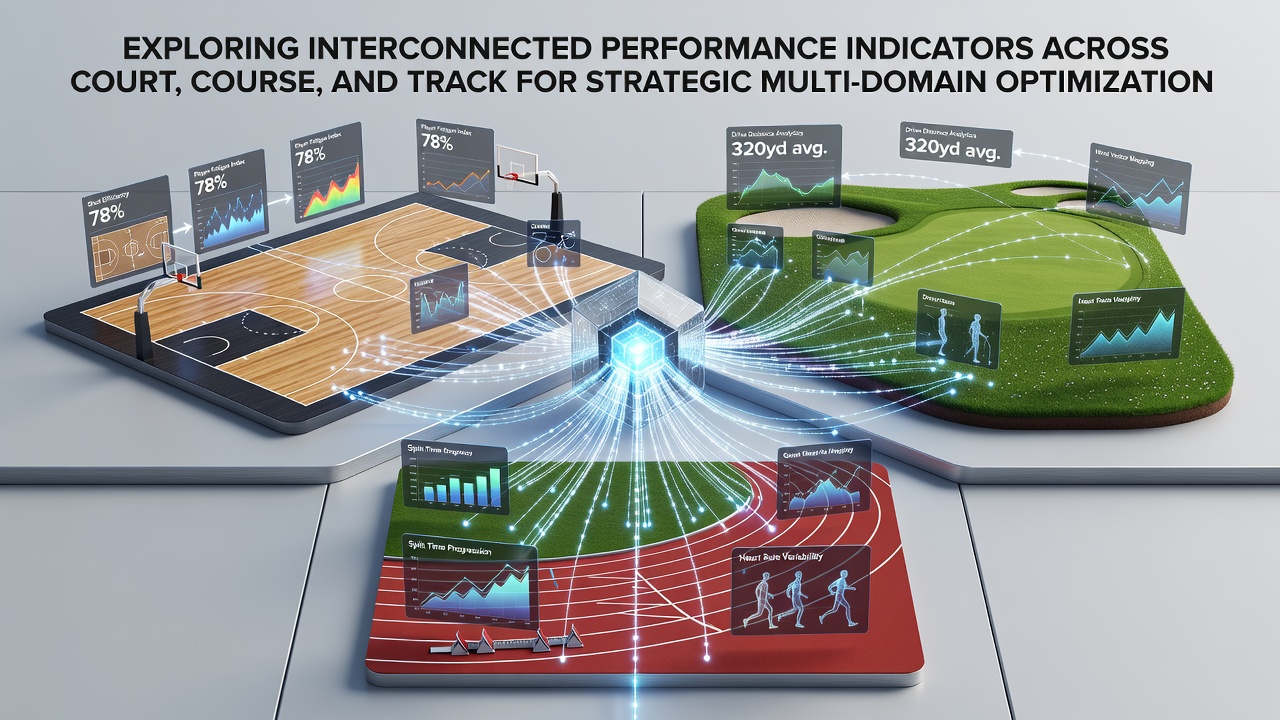
Building Multi-Market Wagers
Strategic construction starts with selecting one indicator from each sport that shares a common theme, such as dominance under pressure, then layering markets that reward that theme. A wager might combine a tennis player’s tiebreak conversion rate, a golfer’s scrambling percentage on approach shots, and a racehorse’s late sectional acceleration, each drawn from events occurring within a 48-hour window. Figures from the European Tour’s performance database and comparable tennis analytics platforms show that when two of the three selected indicators sit in the top 15 percent of their respective fields, the combined strike rate rises noticeably compared with standalone selections. Bettors therefore treat the three sports as a single data pool rather than isolated categories.
June 2026 Scheduling Overlaps
The calendar in June 2026 places the grass-court lead-in events alongside both the Canadian Open in golf and several high-profile flat racing festivals, and these clusters create repeated opportunities for cross-referencing. Performance data collected during the preceding month supplies the baseline, while live adjustments account for surface changes or travel effects. Industry reports from the Hong Kong Jockey Club and the International Tennis Federation both highlight how such clustered schedules increase the volume of usable comparative statistics for those constructing accumulators across markets.
Practical Application Examples
One documented case from June 2025 involved pairing a tennis qualifier’s improved return points won against left-handed servers with a golf player’s elevated strokes gained off the tee at sea-level venues and a racehorse’s strong finishing speed on good ground; the resulting three-leg wager settled successfully because each leg reflected above-average efficiency under comparable conditions. Similar patterns recur when analysts monitor mid-June transitions from European racing to North American golf events, using publicly available sectional and strokes-gained archives to verify thresholds before placement.
Conclusion
Performance indicators drawn from tennis courts, golf courses, and racing tracks share structural similarities that support integrated analysis for multi-market wagers, and the June 2026 schedule supplies regular windows where these connections can be tested against fresh data. By focusing on repeatable efficiency measures rather than narrative form, those constructing such wagers maintain a consistent framework across disciplines.